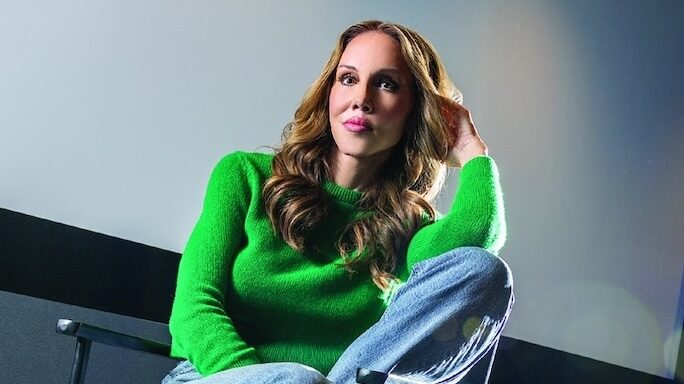
Mary Parent knows how to stay in her lane. Fortunately for audiences worldwide—and the thousands of creatives and execs in the industry who have had the joy of working with her—that lane is very, very wide.
Parent grew up loving movies of all shapes and sizes across a range of genres. That broad palette has served her big, bold career well. So has her knack for spotting projects that possess a magnetic combo of blockbuster potential and enough spin to differentiate them from rote adaptations of existing IP.
Alongside boisterous, sequel-spinning adventures like Dune, Godzilla, Enola Holmes and Pacific Rim are memorable one-offs that stand on their own—Set It Off and 8 Mile, for example—coupling Parent’s producing prowess with the enviable vision and execution of the best directors in the world.
These visionaries include Alejandro G. Iñárritu, with whom Parent has produced the Oscar-winning feature The Revenant and the forthcoming satirical dark comedy Digger, starring Tom Cruise.
“She has never lost the excitement, curiosity, or youthful energy that comes with discovering something new, yet she also has the wisdom that only comes from years of experience, knowing where the obstacles are and how to avoid them,” says Iñárritu. “That combination of creativity and knowledge, youth and experience, fresh excitement and seasoned wisdom, is something that is incredibly rare to find.”
Then there’s Denis Villeneuve, with whom Parent has walked alongside for almost a decade of producing the Dune trilogy. “Mary is wise, straightforward, insightful and thoughtful. She spontaneously inspires trust,” says Villeneuve.
Everyone knows there is no secret formula to success in this business, no single rule to follow that will guarantee a path to the career heights that Parent has summited. But when you ask those who have worked with her what they believe her secret is, the answer is easy.
“She loves what she does. She loves movies. Not only seeing them but making them,” says Tom Cruise, who produced Digger with Parent.
“Her life is cinema,” Villeneuve adds. It’s that simple.
“Mary understands that producing films is about helping everyone to do their jobs better and creating a team. It’s about rolling up your sleeves and going to every single department and having an open line with everyone. It’s not sitting in a separate office—in an ivory tower—commanding. It’s about creating in every moment.”
– Tom Cruise
You Have To Serve The Movie
Defining what she does is also simple for Parent: Producing is a passion, not a job. “It’s something that I get a tremendous amount of joy and satisfaction from, and it keeps me on my toes,” she says. “There’s an excitement I feel in that community and collaboration, in a group of people who often don’t know each other who are coming together for this short, intense period of time, figuring out how to work together, inspire each other, and do our best work.”
“Mary understands that producing films is about helping everyone to do their jobs better and creating a team,” Cruise says. “It’s about rolling up your sleeves and going to every single department and having an open line with everyone. It’s not sitting in a separate office—in an ivory tower—commanding. It’s about creating in every moment. When we’re creating a film, there’s the blank page, and you have to see into the future, years into the future. Of preproduction, postproduction, the release, the theatrical run, the digital run. Every aspect. That’s what she understands, and understands well.”
Whether it’s a gargantuan monster movie, a period drama, a sci-fi spectacle, or a VR experience, Parent’s approach is the same. She just pretends it’s her first film. From that beginner’s mind, she asks herself, What does this project need me to be?
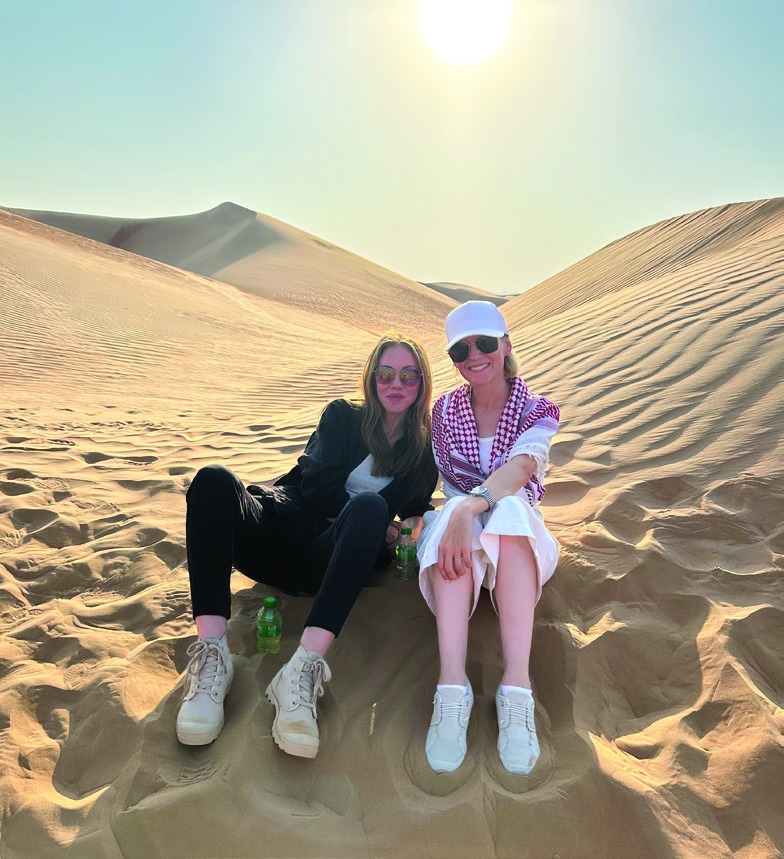
“As a producer, you have to be egoless. It’s about how you can best serve the movie, and that looks different every time,” she says.
A million questions then follow, a checklist of personal and professional accountability as critical as any budget or schedule: What are the challenges of this particular film? What are the holes that I’m going to plug? How can I take work off everybody else’s plate so they can focus on what they need to do? What are the jobs, no matter how small or unexciting, that I can do?
“Because at the end of the day, if your presence isn’t making things better, what’s your value?” Parent asks.
Cruise was aware of Parent’s reputation as a lover of cinema and a dedicated worker before he’d ever met her. He got to experience these qualities firsthand when the two signed up for Digger.
“To be a great executive, to be a great leader, one has to understand every department, every job within the organization. The better that working knowledge, the better they’re able to set goals and predict the outcome,” Cruise says. “The fact is, to lead is to serve. These skills and abilities are hard-earned. And that is Mary Parent.”
Being of service involves going from micro to macro on the daily. “It’s problem-solving on a very high level,” Parent says. “A lot of the problems can be tiny, but tiny problems can grow into big problems. Half the day I’m solving problems, and the other half I’m figuring out how to anticipate and make sure problems don’t happen. Whether that’s creatively managing people or nuts and bolts, you’re constantly shifting gears.”
Managing the nuts and bolts usually comes down to managing people, which isn’t about restraint but rather ensuring creative freedom.
“Mary is someone I admire tremendously, not only for everything she’s accomplished, but for the way she shows up for the people around her,” says Zendaya, with whom Parent has worked for almost a decade on all three installments of Dune.
In order to do this, Parent believes in maintaining a high EQ, or emotional intelligence quotient.
“Artists have to constantly be in a vulnerable state. It’s very important that they feel they’re in an environment of trust and safety where they can try and experiment. You’ve got to be looking around and asking, Are they feeling comfortable? Are they feeling safe? And paying attention to the energy that you’re bringing,” she says.
“Even if internally you’re like, ‘Oh my gosh, oh my gosh, oh my gosh, we have this thing going on over here,’ it’s knowing how to keep that to yourself and bring a calm energy where you’re supporting everybody to do their best work,” she adds. “You want them focused on what only they can do.”
Iñárritu experienced this first-hand when he met Parent in December 2014. He was in the thick of filming The Revenant in the Canadian Rockies outside Calgary, Alberta. The production was facing stormy weather, both literally and figuratively, caught in a maelstrom of technical, logistical and budgetary challenges.
“We needed someone with experience, but also youth, energy and the ability to look at these situations from a freer perspective. We needed someone who could help us find a better process for confronting each of these challenges, and that person was Mary Parent,” Iñárritu says.
True to form, Parent applied an objective, clear and well-informed approach to solving seemingly insurmountable obstacles, becoming an indispensable player in keeping the production moving forward. And she did so, Iñárritu emphasizes, “with a wonderful sense of humor.”
This fun and fruitful relationship has continued for 12 years, helping the lauded Mexican filmmaker grow not only as a director, but as a producer himself.
“Mary’s experience, after nearly 30 years in the industry and having held so many different roles, has given her a remarkably complete, holistic understanding of filmmaking. Many people only see one angle because that’s all they’ve experienced, but Mary has the ability to see the entire picture, 360 degrees. That is how she has helped me the most,” says Iñárritu. “She has taught me to always pay attention not only to the narrative and the director’s perspective, but also to grow as a producer and understand a film’s needs from every possible angle.”
Parent says she loves all her cinematic children equally, but some make her sit up a little more proudly. When asked to name the films she could die tomorrow feeling completely fulfilled by having accomplished, it’s a tie. Digger is one. (Don’t worry—the second will be revealed later.)
But before we get there, there’s a bit to be said about how Parent got here.
“Artists have to constantly be in a vulnerable state. It’s very important that they feel they’re in an environment of trust and safety where they can try and experiment. You’ve got to be looking around and asking, Are they feeling comfortable? Are they feeling safe?”
—Mary Parent
Every Rung To The Top
Parent’s rise to chairman of worldwide production at Legendary Entertainment was the result of building a strong foundation over three-plus decades of leaving her ego outside the door, putting her nose to the grindstone, and soaking up every aspect of production, including the critical bookends of development and distribution.
The titan, who in 2022 received the PGA’s David O. Selznick Achievement Award and was named Variety’s Billion Dollar Producer, started her industry journey as a talent agency assistant in 1992.
After graduating from USC with a degree in business, Parent had launched a successful women’s fashion company. But her heart and soul had always been in film. So, with characteristic daring and gumption, she made the leap into an arena where she had no connections or experience. She didn’t try to cut the line or bypass any trials by fire. She was thrilled to be starting there, anywhere, in the industry she longed to be a part of.
“I started at the very bottom. I didn’t skip any rungs. I had pretty much every job you can have coming up,” Parent says.
She proved herself so adept and indispensable that she was hired as a creative exec at New Line in 1994, working under then-president and COO Mike De Luca. Parent treasures much about her time under De Luca’s wing, not the least of which was his championing of women at a time when too few were in positions of power, especially when it came to being able to green-light the grand cinematic events that Parent loved.
“Early in my career, there were not many female producers making big movies. Some were well ahead of me as executives, and if it weren’t for them, I wouldn’t have been able to have the jobs and the opportunities I had,” Parent says. Years later, when Parent was scoring studio deals, women still made up an appallingly small number of producers who were getting their own.
De Luca’s generosity as a boss was as much about practicality as it was about the value of equity. “Unlike a lot of bosses, he was all about, ‘How much more can you do? That frees me up to do more.’ It was about giving people opportunity and giving people credit for their work,” Parent recalls.
The nature of New Line proved a transformational training ground for Parent. “Nothing was handed to you. We didn’t have a lot of money, and we had to get real resourceful, real quick. You had to advocate for every movie. You had to do a P&L. You were on set. You actually learned how to make things.”
One of those things was Set It Off, a turnaround project that Parent found and passionately advocated for. The film was a critical and box office hit and continues to be revered as a landmark depiction of Black culture, driven by four strong female leads.
While she was at New Line, Jerry Bruckheimer offered Parent a job at his company—a job that she ended up turning down because she was appreciating all there was to learn at New Line. But Bruckheimer saw so much potential in her that he kept lending a hand in other ways, mostly quietly in the background with no agenda. In this regard, Parent refers to him as a fairy godfather.
“Over the years, people would call to offer me an opportunity, and they would say, ‘It’s because Jerry Bruckheimer has observed this about you.’ He’s so inspiring, both because of the pivotal films of his that I grew up loving, and how he is still working at this level at this point in his career, with this much success, approaching everything as if it’s his first film. He was helpful to me in ways that I don’t know if he realizes. I’m very, very grateful for that,” Parent says.
After rising to vice president at New Line, Parent felt empowered to leave the nest. In 1997, she made the move to work under Marc Platt and Stacey Snider at Universal Pictures, where Parent’s work ethic and reverence for every part of the moviemaking puzzle—and the people doing those jobs—helped her ascend to vice chairman of worldwide production. She credits Kathleen Kennedy as one of the torchbearers who helped make it possible.
“The opportunity to work with a female producer who was working with filmmakers who formed the cinematic experience for me was huge,” Parent recalls. “She was very generous with me, sharing her stories about coming up in the industry.”
At Universal, Parent threw her passion behind another project that others weren’t so sure of: the semiautobiographical, Eminem-driven drama 8 Mile. The film was a huge hit with audiences and critics alike, and grabbed the Best Original Song Oscar at the 2003 Academy Awards.
In 2005, Parent partnered with Scott Stuber to launch production shingle Stuber/Parent. Under its deal with Universal, the pair’s output spanned romance, comedy, and action-adventure with The Break-Up; You, Me and Dupree; The Kingdom; Role Models; and Welcome Home Roscoe Jenkins.
Ever keen to try new things and learn more, Parent moved to MGM, where she served as chairman and co-CEO before inking a first-look deal at Paramount in 2011 for her new production company, Disruption Entertainment.
There, Parent’s commitment to the art she loved so much paid off in 2016, when she received her first Best Picture Academy Award nomination as well as a BAFTA and a Golden Globe for The Revenant. Also in 2016, Parent was named vice chairman of worldwide production at Legendary Entertainment. Under her Disruption banner, she had already helped launch Legendary’s Monsterverse with Godzilla and Guillermo del Toro’s Pacific Rim, as well as Darren Aronofsky’s Noah and The SpongeBob Movie: Sponge Out of Water.
From the moment she arrived at Legendary, Parent produced a scope and range of films with undeniable cultural impact that have transported millions the way she was transported by the films she loved growing up. Films like A Minecraft Movie, Godzilla x Kong: The New Empire, Enola Holmes and Pokémon Detective Pikachu have played to packed audiences of all ages around the world.
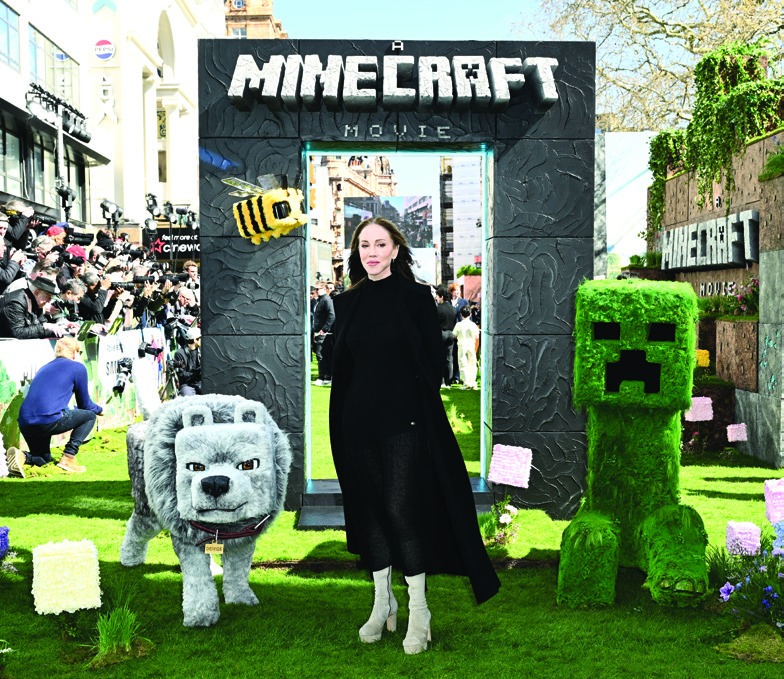
“Mary has a rare ability to recognize ambitious creative visions and the strategic thinking required to bring them to life,” says CEO of Legendary Entertainment Josh Grode. “In doing so, she has helped build enduring franchises that entertained millions of moviegoers and inspired generations of filmmakers. She embodies the thought that great filmmaking and commercial success can go hand in hand.”
Most recently, Parent completed Enola Holmes 3, Kitao Sakurai’s Street Fighter, and the latest Monsterverse installment, Godzilla x Kong: Supernova. She also just wrapped the much-anticipated Dune: Part Three, the final piece in Villeneuve’s adaptation of the epic sci-fi novels by Frank Herbert. It marks the completion of a trilogy so massive in scope and expectation that there was arguably no producer more experienced, imaginative, resourceful, tireless and talented than Parent to tackle it.
Not only has she brought it to fruition, but she’s done so to universal acclaim, scoring two additional Best Picture Oscar nominations for Dune Parts One and Two.
After being on a journey with Dune for almost 14 years, it’s no surprise that the trilogy shares the top spot with Digger as Parent’s favorite cinematic child. The journey began when Parent sold Dune to Alex Garcia, EVP of creative affairs at Legendary, after winning him over while they were working on Godzilla in 2012.
“What attracted me to Dune,” says Parent, “was that, even though this book was written 50-plus years ago, it was incredibly prescient on every level, from power to religion to resources to the environment. At the same time, I knew enough to know that if one of three filmmakers was not going to do this movie, do not attempt.” Villeneuve was one of those three.
What does the celebrated director recall about the first time he met Parent to discuss Dune? “It was the fastest and most efficient meeting ever,” Villeneuve recalls. “We both wanted to make this adaptation together. But I never imagined for a second that by shaking her hand, I was embarking on a 10-year journey.”
“She had a deep knowledge and understanding of the source material and was as intrigued and fascinated by the human aspects of the story and Paul Atreides’ emotional journey as she was by the politics and the world-building,” Villeneuve adds. “I understood quickly that she would be the perfect ally to bring this complex and intricate family story to the screen.”
Highs And Lows
It would be easy for anyone assessing Parent’s track record and all the testimonials about her tenacity to conclude that she has rarely, if ever, experienced failure. But of course she has.
Some projects fell to the wayside. Some she stepped away from during the development process after keenly discerning that she wasn’t the right fit. Then there are those that she wanted to bring to fruition with all her heart and soul, that she felt in her bones were timely, but that she just couldn’t make, despite best efforts, the best network, and yes, that undisputable track record.
“Mary’s experience, after nearly 30 years in the industry and having held so many different roles, has given her a remarkably complete, holistic understanding of filmmaking. Mary has the ability to see the entire picture, 360 degrees. She has taught me to always pay attention not only to the narrative and the director’s perspective, but also to grow as a producer and understand a film’s needs from every possible angle.”
—Alejandro G. Iñárritu
Parent calls one project in particular, which she doesn’t name, the worst implosion she’s ever experienced, “shrapnel and all.”
“This was deeply, deeply important to me. It was an excellent reminder of how important it is to be relentless, to regroup, and to understand why it went down. In the end, the movie gods were doing me a favor,” she says.
This speaks to another key tenet of being a producer for Parent: belief. After all, she says, “Everything starts off as a caterpillar before it’s a butterfly.”
There’s a delicate balance involved in that as well. It’s up to the producer to believe in a project when no one else seems to get it, but not so blindly that they shut out valid criticism or input, and end up believing themselves off a cliff.
“You have to know how to hear that feedback and be like, ‘Is that valid? Do we pivot?’ At the same time, you’ve got to be willing to lay it on the line and fight for things, and then you’ve got to be more right than wrong,” Parent says.
In the end, Parent is deeply proud of how relentless she and the filmmaker in question were, even though the tough circumstances proved too much in the end. But she’s human, and it hurt.
“I’m pretty resilient, but I sure felt that one.”
Putting People First
Parent is the first one to emphasize that this resilience, invaluable as it has been to so many, is the result of having worked with the right people—those with the qualities that help her maintain a high EQ so she can be at her best for others.
“I only want to have people around who know how to manage fear and stress, and frankly, who are very comfortable in the uncomfortable,” she explains. “What I look for is real partnership and a similar kind of egoless approach.”
“I also want people who have a different skill set than I do,” she adds. “I’m going to defer to their expertise and to the director, who also knows what their own strengths and limitations are, because ultimately, they’re the ones driving the car. We’re all jammed into the car, too, but we’re here to help serve a vision.”
No one can argue the fact that the industry is one heck of a rocky road—when there’s even a road at all—and fear is fueling so much of how things are currently getting done or not getting done. “You can’t take anything for granted,” Parent says. “You have to be sure that the people you need to say yes are there and aren’t going to pivot out from underneath you at the last minute.”
Every day, Parent gives it her all to be fully present for those colleagues whom she has said yes to. Putting people first has paid off time and time again.
“When I’m working with Mary, she knows she can depend on me, and I know I can depend on her,” Cruise says. “You know it’s going to get done, and it’s going to get done in the best possible manner for everyone.”
Says Zendaya, “Mary is one of the rare people who combines incredible creative instincts with genuine kindness. Working on Dune, I was always struck by how deeply she cared about both the film and the people making it. She has a way of making everyone feel seen, supported and inspired to do their best work.”
This innate kindness made possible one of Parent’s most ambitious works, one that was very much outside the feature fare she had become most known for.
In 2017, Parent produced Iñárritu’s conceptual virtual reality installation CARNE y ARENA (Virtually present, Physically invisible), a powerful immersive experience that has visitors walk in the footsteps of immigrants and refugees based on true accounts of how they risked their lives to cross the U.S.-Mexico border to freedom.
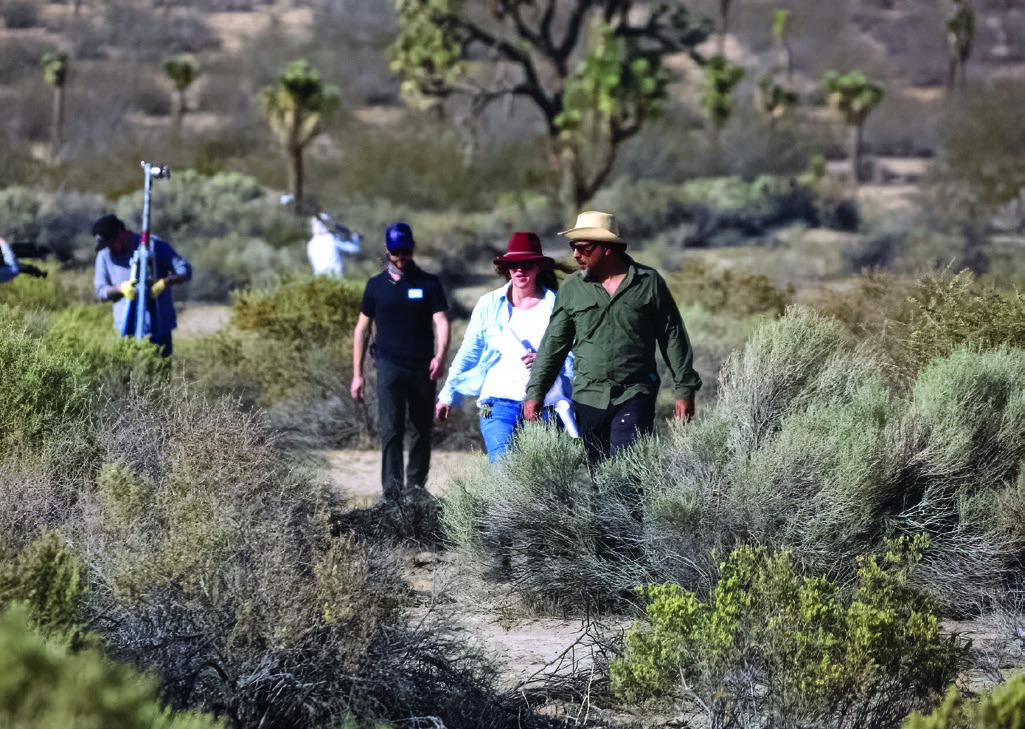
“She is a deeply human and sensitive person, someone with an extraordinary capacity for empathy. She understands the suffering of others and never hesitates to do everything she can to support a worthy cause that helps ease someone else’s pain. That was the origin of CARNE y ARENA,” Iñárritu explains.
When he approached Parent with his idea for a VR experiment, it was the first time either of them had thought about doing anything like it. They had a vast amount of screen experience between them, but nothing equal to this experiment, and no way to gauge where it could lead them. In the end, none of that mattered. What did matter was Iñárritu’s desire to generate empathy for the reality of the suffering experienced by millions of people driven by unimaginable hardship to walk for hundreds of miles in the harshest of conditions.
Parent not only grasped what Iñárritu was going for, but she also signed up to shoulder the risk by financing and producing it with him, along with Miuccia Prada of Fondazione Prada and cinematographer Emmanuel Lubezki.
“It took us more than two years to figure out how to make it happen, but Mary is someone with empathy and courage. She isn’t afraid to face new challenges, and that’s what makes her so remarkable,” says Iñárritu.
The project ended up being so astonishing that it was awarded a Special Achievement Oscar in 2017 from the Academy of Motion Picture Arts and Sciences.
To those who’ve had the benefit of working with her, accolades like this are well-deserved recognition not just for what she does, but why she does it.
“She’s a good person. She likes people. She’s honest. She’s someone who works to make things better,” says Cruise. “And over these decades, she just gets better and better and better.”
Stepping Into The Unknown
With the future appearing more uncertain than ever, there’s nothing of greater value than personal connections, whether it’s the communal experience of seeing a film in a theater or the bond between collaborators forged in the trenches of a seemingly impossible production. These human touches are what give Parent hope in an industry struggling to regain its footing.
“There’s a lot more competing for your time and attention—social media, gaming, streaming. I think Hollywood as a whole didn’t put forward its best work for a while. We did get factorylike, and the bar has gotten higher. I think that’s a good thing, in a way,” Parent says. “Now more than ever, people have to be doing their best work. People want something that feels fresh and different and makes them feel something. We’re at a time in the business where there’s no net and no floor. But there’s also no ceiling, whether it’s the number that a film opens at or what it ultimately does.”
She points to the unanticipated success of Obsession as an additional beacon of hope. “I’m massively impressed by making a film for $750,000. One of the things I worry about is the obstacles for people getting into this business. At the same time, there’s more opportunity, and having those muscles, knowing how to make quality storytelling at a price, is a superpower,” Parent says. “Those are muscles that are going to really bode well for producers coming into the business now.”
She encourages the industry not to lose sight of tried-and-true aspects of producing during this time of upheaval. Number one: We are nothing without the artists and creators. Period. End of story.
And who are the producers who will come out the other end of this storm not merely having survived but thriving?
“Producers who can do more with less, who understand that it begins and ends with the artists and the creators themselves, and who are willing to really commit and are doing this for the right reasons. It’s so tough right now. The people who are coming in want to be here for the right reasons. Those are the people we need to keep this incredible art going.”
When it comes to the looming question of AI, Parent addresses that, too, with hope. “A lot of young people are very concerned about AI, and understandably so. But part of what makes film so great is its authenticity,” she says. “Human beings aren’t perfect, and frames aren’t always perfect. Sometimes when you look at AI, it’s so perfect that it has a lack of authenticity, and a soullessness that can stand out. The human touch cannot be replicated.”
“Where I find hope is in the belief that storytelling isn’t going away. I don’t believe that our need and our desire to be entertained and to be moved is going away.”
Whatever happens, Parent is poised to continue shining as a beacon for the profession of producing, spending each day not only tackling the pesky minutiae and the daunting mountains, but doing it with the relentless joy and gumption that comes when you love something so unconditionally. Besides, there are still some bucket-list items to cross off. For example:
“I haven’t made a $750,000 film. That sounds incredible!”