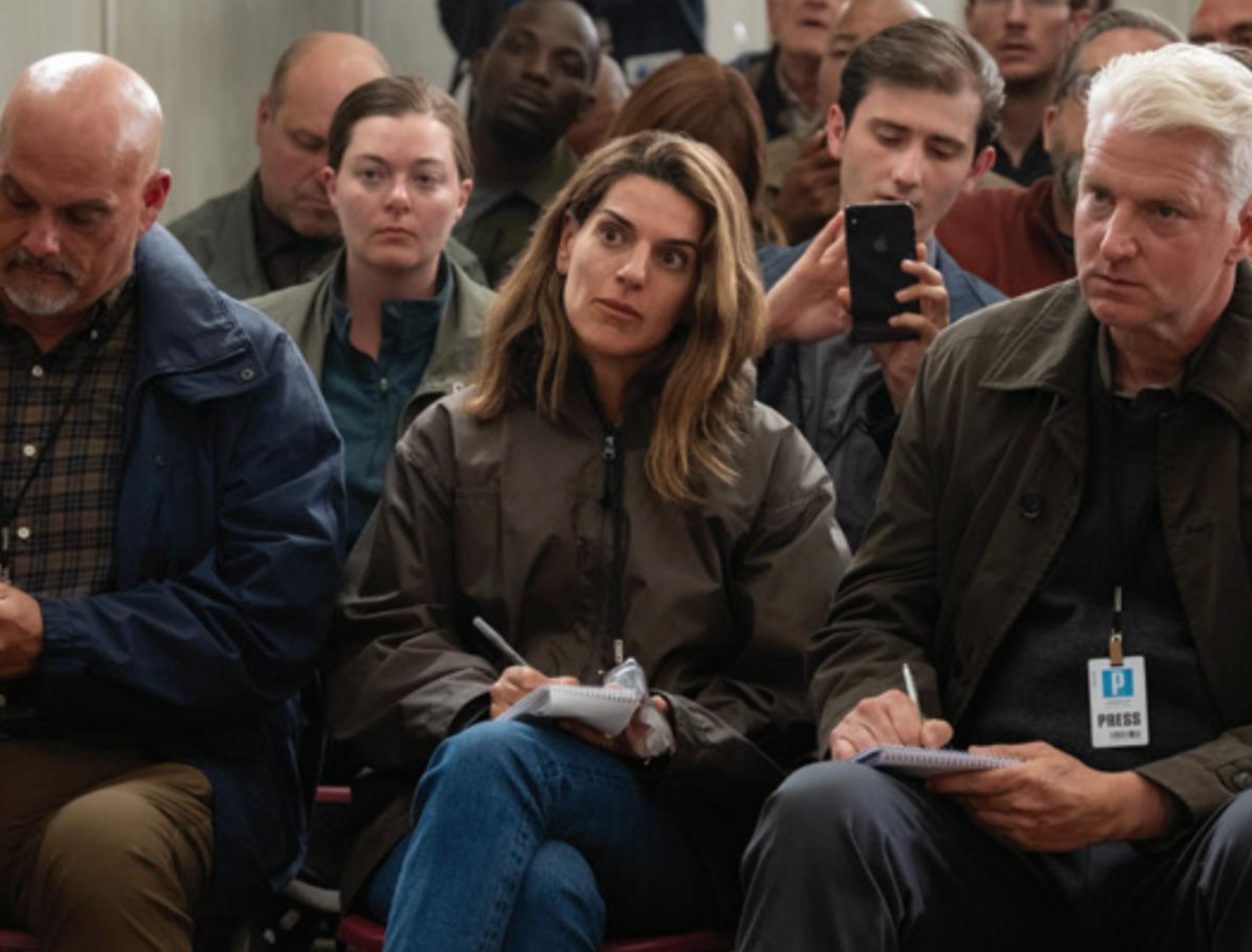
Mary-Jane Mitchell is a British American producer, researcher and filmmaker based in New York City who specializes in research-led storytelling for scripted and documentary. She cocreated and produced the six-part documentary series I, Sniper with John Smithson’s Arrow Pictures, and Mister Untouchable with Alex Gibney and Marc Levin. Mitchell also developed American Animals and The Imposter with director Bart Layton and was the field correspondent on Eugene Jarecki’s Sundance Grand Jury Prize-winning Why We Fight.
Most recently, Mitchell produced the Netflix feature documentary The Carman Family Deaths for Rachel Grady and Heidi Ewing’s Loki Films. She is currently working with director Ali Abbasi on the development of his next feature following the Oscar-nominated hit The Apprentice.
Over the years, Mitchell has become an industry specialist for directors and studios concerned with authenticity and the adaptation of true stories for both scripted and unscripted projects. Her work often focuses on accessing complex and emotionally charged environments in order to help filmmakers tell real-life stories with accuracy, soulfulness and integrity.
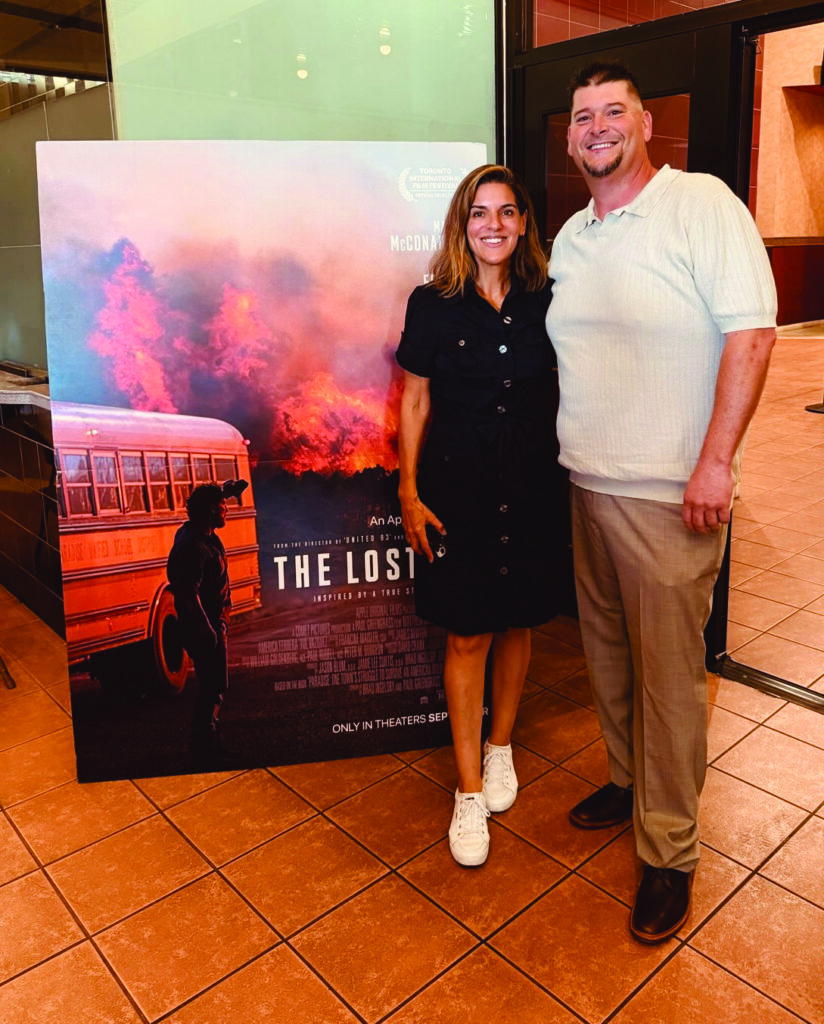
One example: Mitchell served as research consultant on director Paul Greengrass’s acclaimed 2025 feature The Lost Bus, which was based on real events that transpired during the deadliest fire in California history in November 2018.
Mitchell has worked extensively with federal, state and local agencies and stakeholders, and often directly engages complex subjects, including crime victims and perpetrators. Here, she describes what a typical day of doing her careful, conscientious work looks like.
In The Beginning
My alarm goes off at 6 a.m. and I put the kettle on. I am from across the pond, so my day always begins with a cup of Yorkshire tea. Before I check my emails or messages, I spend 20 minutes meditating. Whether I am at home in New York City or traveling, it’s a ritual I rarely miss.
For more than 25 years, I have told stories about loss: the loss of life, liberty, home and community. Whether I am producing documentaries or acting as the research consultant on movies like The Lost Bus, my work depends on people trusting me with the most painful moments of their lives. My responsibility isn’t simply to help tell their story well, but to carry it with care. Starting the day quietly helps me approach that responsibility with the calm and focus it deserves.

One habit I adopted about a decade ago was to have the discipline to keep my phone on “do not disturb” until the morning rush at home was over, and I had dropped my children at school. Whatever was waiting for me online could not be solved until after I’d “produced” another breakfast and got myself and kids out the door, which meant I was fully present with them before the intensity of the workday began.
My children are teenagers now, and grimace at the thought of me accompanying them to the school gates. But a couple of mornings each week, I ride the subway with them anyway, my phone on silent, and somewhere between home and downtown, I tease out the headlines of what is happening in their world.
Settling Into The Workday
If I am not traveling, I am at my desk in my home office by 8 a.m. Much of my work is solitary and often resembles gumshoe investigative journalism more than on-set producing.
As I often work with directors and studios based in London and Europe, my schedule is dictated less by the clock than by time zones. Mornings usually begin with a flurry of calls. It’s lunchtime in the U.K. by the time my day begins, and everyone is already in full swing. I have to play catch-up fast.
If I am working as a research consultant on a movie, conversations are usually with the director, discussing areas of the script that need to be clarified—e.g., “In the real world, how would this actually happen?”—and any new avenues of research the story demands.
Once I get my marching orders, the middle of the day onward is when I can really get stuck into the meat of my work. London has logged off, and California isn’t calling me yet. The phone stops ringing, and the inbox slows down. This is when I disappear into the research: writing, reading, following leads and tackling whatever new question the director has thrown my way.
These quiet, uninterrupted hours are precious. Notifications are silenced. My phone is devoid of enticing apps, and I don’t have social media. I’ve learned my best work comes from sustained attention, so I guard mine carefully.
The work I do sits in a niche, but growing, corner of the film industry. As more filmmakers tell stories inspired by real events or create fictional worlds grounded in reality, the role of the dedicated researcher has evolved far beyond fact-checking. While the crew may be filming hundreds of miles away, I’m often working in the real community where the story unfolded, helping to answer the creative questions that inevitably arise when real events are brought to the screen.
How I approach this work was shaped long before I ever stepped onto a film set. I studied criminology at the London School of Economics and later at the University of Cambridge. I learned to resist simple narratives of heroes and villains. Instead, I was taught to ask deeper questions: What social, psychological and institutional forces shaped an outcome? Which systems failed and what else was happening in that person’s life?
Those questions have guided every project I’ve worked on. Whether I’m producing a documentary or researching a feature film, I’m interested in more than the facts. My job is to understand not only what happened, but what it felt like to experience it.
That philosophy shaped my work on The Lost Bus. I spent considerable time in Northern California, making repeated trips to the impacted community while production was happening two states away. I sat in people’s living rooms, met them at work, drove the streets they had evacuated, shared coffee, lunch and dinner, attended family gatherings and most importantly, earned their trust.
I was fortunate to stay with the project from preproduction through release. My time on the ground allowed me to prepare extensive research dossiers. I formed great working relationships with local consultants and experts. I sourced archival material, assisted with street-casting real firefighters for background, accompanied the real people to set, even played a reporter for a small cameo in the movie, and worked with Apple TV’s marketing team on developing a thoughtful release strategy.
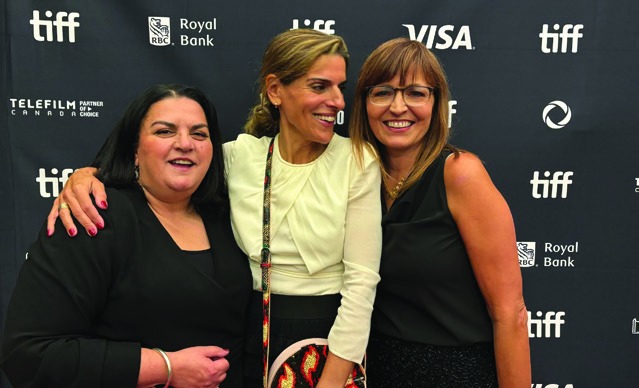
The most meaningful part of the job came at the end, working alongside Paul Greengrass and Jamie Lee Curtis to ensure that the real people remained part of the rollout process. They saw the film privately before its release, had the opportunity to ask questions, and most importantly, felt heard. At the premiere, in Toronto, they were not only honored by the actors that played them but received a standing ovation from the crowd of 1,800 for their selfless acts of bravery.
An Afternoon Boost
My days are often long, particularly when I’m working across multiple time zones. By the time New York is winding down, California is just finishing its workday, so there’s often one last round of calls waiting for me.
Around 7 p.m., though, everything stops for family dinner. We gather around the kitchen table and catch up on everyone’s day. We laugh and we bicker, but either way we reconnect before I head back into my office for another hour or two. That dinner hour is my reset.
By the time I sit back at my desk, I’ve stepped away from work just long enough to return to it with a final burst of energy. There’s usually one more conversation worth having before I shut down for the night.
And That’s A Wrap
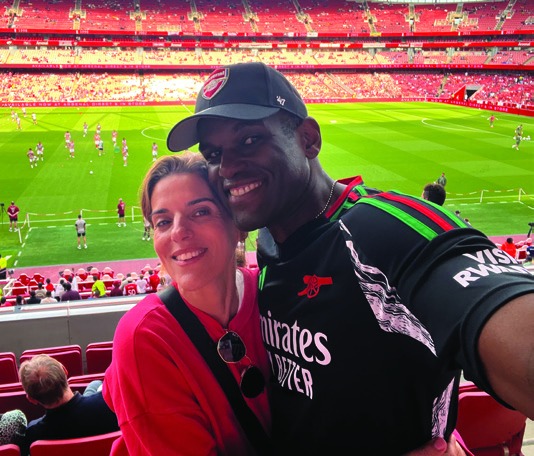
When people ask how I switch off, the answer is simple: Arsenal Football Club.
I grew up in North London and have supported Arsenal since I was a girl. When I moved to New York, I brought that love of football (soccer) with me.My husband is American and knew nothing about the game when we met, but somewhere along the way, he became every bit as invested as the rest of us. Our two boys are fanatical, and watching Arsenal together has become one of the rituals that anchors our family life.
Wherever work takes me, I try to find a way to watch the matches. If I miss one because of filming or travel, the last thing I do before bed is watch the Arsenal highlights.
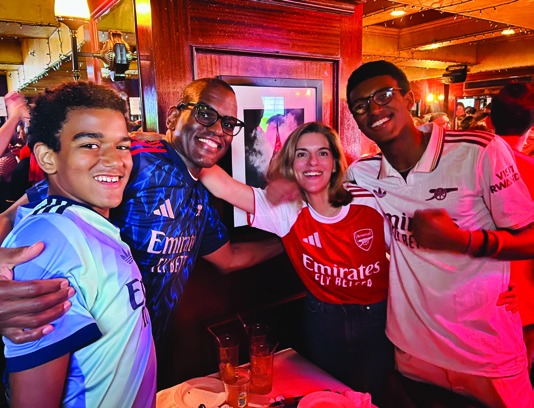
Much of my work explores what binds families and communities together in moments of extraordinary tragedy. Football reminds me that belonging is also built through shared hope and joy. For 90 minutes, individual lives give way to something collective. Families, friends and strangers sing together, celebrate together and despair together. We all need places where we belong and where joy and disappointment are shared rather than carried alone.