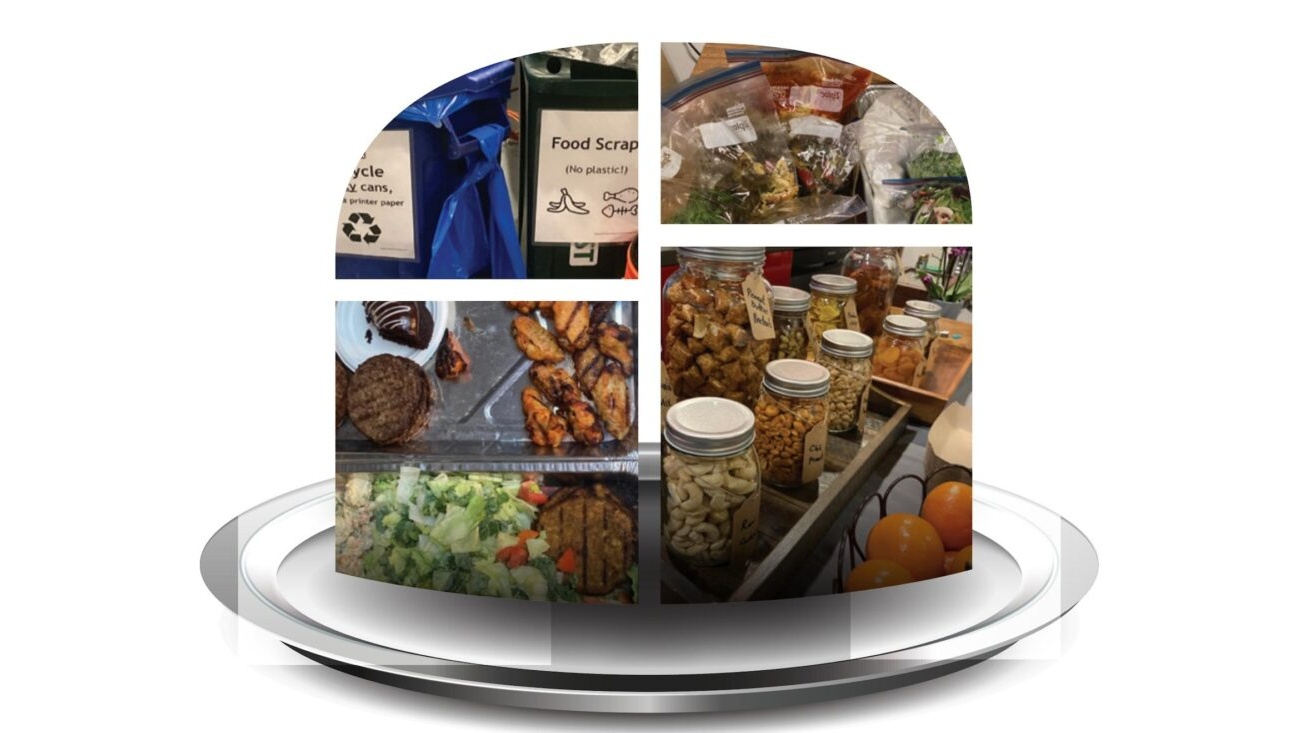
Terri Freedman’s approach to sustainability is powered by a seemingly simple tactic: asking questions. As a member of IATSE Local 80—which represents Motion Picture Grips, Crafts Service, Marine, First Aid Employees, and Warehouse Workers—and the owner of Eat Healthy Crafty, Freedman has spent years turning that habit into a quiet revolution on set—one that touches everything from soda cans to composting bins to the hundreds of meals that would otherwise end up in a dumpster.
For producers looking to tighten budgets, boost their Environmental, Social, and Governance (ESG) story, and do right by their crew and community, her playbook offers a surprisingly low-cost blueprint with a primary directive:
“Communication is always the key.”
A Problem In Plain Sight
Set catering has a reputation for abundance, often for good reason. “Catering on a lot of these jobs is really high quality,” Freedman notes. But that abundance has a shadow side: mountains of untouched food, tossed at wrap because no one thought to ask what else could be done with it.
“There’s a lack of education around food waste,” Freedman says. “Caterers, producers and venues don’t know these things, whether it’s the waste services that are supposed to be provided, the local and state restrictions about foodware, or the rules around food reallocation and donation.”
The stakes go beyond good optics. Food waste sent to landfill breaks down and produces methane, a major driver of climate change.
The timing makes it sting more. The industry is still grappling with a prolonged work slowdown at a time of painful increases in the cost of living. Food insecurity isn’t confined to people without housing. Plenty of working people—including crew members between jobs—are skipping meals to feed their kids or having to choose between groceries and rent.
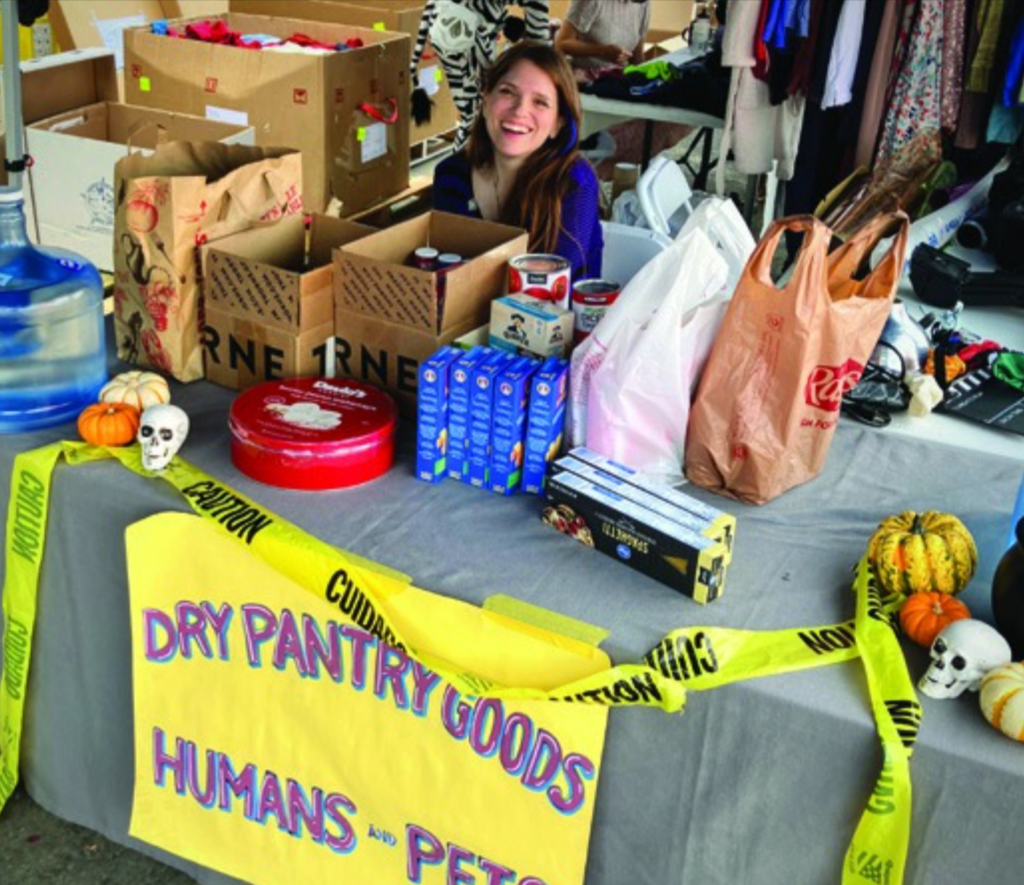
During the 2023–25 strikes, Freedman helped run a pantry out of her union hall, and today several hair and makeup artists from Local 706 still operate a biweekly grocery distribution for IATSE members and Teamsters who need support. For many crew members without steady work, that food is a lifeline.
“The legwork it takes to do the right thing is minimal,” Freedman says. “The benefits far outweigh the effort.”
It’s easy to spot the problem when you stop and look, but solutions are also easy to undertake when your perspective shifts just a tiny bit and you realize that nothing has to be wasted.
The Power Of Giving
Freedman’s method for rehoming food is equal parts logistics and relationship building. On a nonunion feature she joined in May, she set up trash, recycling, and a labeled countertop food scrap bucket wherever she worked. If the location had a green organics bin—required by California law at commercial facilities, but not always actually in place—she used it. If not, she took the scraps home to her own bin.
That gap between what the law requires and what’s actually on site is one reason Freedman wants location scouts to change how they ask the question. Instead of “Do you have a green bin?” she suggests scouts ask, “Where is your green bin?”
Leftover prepared food is trickier than recyclables, largely because of a knowledge gap. On more than one smaller production, Freedman asked what happens to unused catering and got the same answer: It’s thrown away. No one on set knew about California’s Good Samaritan Food Donation Act, which protects from liability people and companies who donate food in good faith.
Once she explained this, Freedman began collecting food between lunch and wrap, storing it in the location’s fridge and taking it with her on her way out to distribute since these smaller productions couldn’t afford a third-party pickup service. When a larger catering company was hesitant about donating leftovers, Freedman had production email the caterer directly with a liability release, which cleared the way.
Food handler certification removes another layer of hesitation for both donors and recipients. In California, it costs $11.99 for a two-hour course through ServSafe. “That certification can help both the donor and recipient feel more comfortable because the food handler knows the best practices for handling food,” Freedman explains.
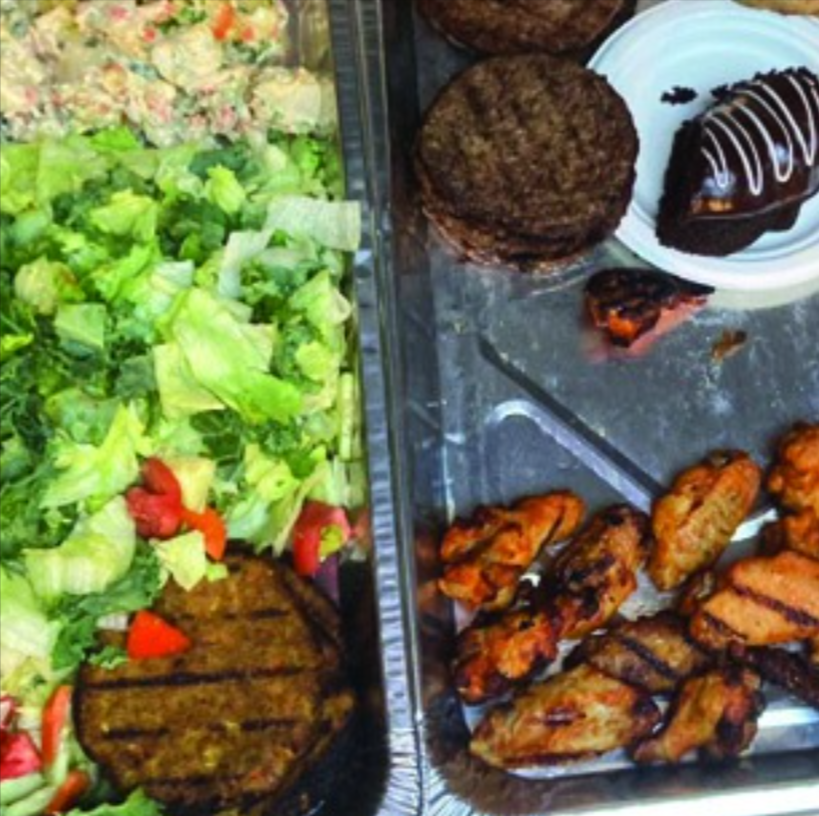
The methods of redistribution depend on what time you wrap, where you are and what kind of food you’re holding. LA Community Fridges work well for boxed meals or unopened items. Neighborhood Buy Nothing groups are useful for putting out a call for takers. Freedman advises always posting or sending photos of what you have to donate; recipients need to see the quantity and type (salads versus a meat dish versus snacks) and judge whether they have the fridge space or facilities to accept it.
Perfect Timing
One recipient let Freedman drop off food at 6:30 a.m. after overnight shoots, then distributed it to her neighbors. But late-night wrap donations require their own playbook, since most nonprofits and shelters aren’t operating at 11 p.m.
Freedman has found two reliable, always-open options: hospital emergency rooms and fire stations. She’s dropped off bags of barely touched coffee and second-meal leftovers at her local ER at 3 a.m. and found security eager to accept them. “A lot of workers there are not rich doctors,” she says. Fire stations, staffed 24/7, will also take catering trays for firefighters.
One of her most memorable donation stories happened by accident. After a job left eight untouched catering trays of sandwiches from a midday snack, Freedman pulled them from the fridge at wrap with no plan for where they’d go when she left for home at 10:30 p.m. that Friday. But when she realized she was driving through downtown LA near Skid Row, Freedman made a U-turn, found a man with a table on a street corner, and offered him the trays. He immediately accepted the donation and ensured her a line would form around the block within minutes.
“That was actually one of the easiest experiences I had donating food because no receiving fridge or advance coordination was necessary, and it was definitely going to people who needed nutritious food immediately,” Freedman says.
Freedman has learned to manage her own limits, too. She plans donation routes that fit her schedule so they don’t turn into hours of extra driving, especially before an early call time. She communicates with potential recipients as soon as a meal wraps, with a quick text or post asking who wants what.
She tries to spread the word that “best by” dates, which the USDA has clarified are indicators of quality, not safety, are not a reason to discard something. Freedman regularly finds chips or snack bars past their printed date sitting around from previous productions. Rather than tossing them, she posts them in Buy Nothing groups with full transparency about the date so recipients can decide for themselves whether they want to pick them up.
For producers wondering what to physically stock for these kinds of efforts, Freedman’s list is simple: gallon airlock bags, aluminum foil, gloves and a Sharpie for labeling and dating each container.
Recalling the donation efforts she made during one job, Freedman says, “Yes, it’s going the extra mile, but it was important to me, and it served a ton of people. That four-week job fed up to a hundred people per week in addition to the cast and crew.”
Planning Makes Perfect
The best version of all this happens in preproduction, not in a parking lot at 11 p.m. Freedman recommends producers ask early on whether their catering company has a donation plan. If they don’t, the production can consider partnering with a vendor like Every Day Action, which was founded by two DGA first ADs, so the team understands how sets actually run. “It’s run by film people for film people to address a big issue,” says Freedman, who began introducing the company to producers on commercial jobs in 2021.
Having a dedicated donation fridge, allotting space in a main fridge or even just keeping a designated cooler packed with ice isn’t a heavy lift.
When Freedman brings these ideas to producers, the reaction is usually enthusiasm rather than resistance. “It’s an effort that didn’t occur to them because they have so many other things on their checklist,” she says. “They’re especially excited that I’m not asking for any extra money, time or manpower.”
Freedman also flags a donation spot that tends to be overlooked: the location or facility itself. If it has a staff break room, she’ll ask an employee or the facility rep whether the staff would want the leftovers. “I have never been turned down,” she says. For example, laborers at the Burbank Equestrian Center benefited from leftover catering after Freedman coordinated with a neighbor—a retired IATSE Local 700 postproduction worker—who brought the food to the center.
Donation planning doesn’t need to be contained to catering and crafty. The art department can generate its own surplus of perishables and nonperishables, particularly when a food stylist is involved. Looping them into the plan early, asking them to report on the quantities and types of food they’ll have, closes another gap.
The Size Is Right
Donation solves what to do with surplus food. But Freedman’s other core message to producers is about preventing unnecessary surplus in the first place without swinging so far the other way that crew go hungry.
Some productions over-order to project an impression of abundance on set. Freedman’s pushback isn’t to eliminate that generosity, but to calibrate it. “We can still do morning and afternoon passes, but can we scale it back?” Her advice is to actually watch what people consume and order to that, rather than guessing or assuming more is better.
It’s also necessary to prevent lack. Lower-budget productions trying to trim costs sometimes come up short because headcounts weren’t communicated accurately, or because no one accounted for extra people showing up that day, such as entourages or parents accompanying minors. Such a shortage triggers a panicked overcorrection, with the next order going well beyond what’s actually needed.
The fix is the same: constant communication. “Ask what we can do to continually not have so much waste instead of simply throwing money at a line item and saying, ‘Just spend it,’” Freedman advises.
Water coolers where cast and crew can refill reusable bottles are becoming standard on more sets, and Freedman sees an opening to pair that kind of setup with food donation and recycling planning from the start.
When a shoot goes well, she hears about it directly: “The client really loved that you had canned water, so we want that again,” producers have told her. This feedback opens the door for Freedman to follow up with, “That’s great! How about we take one more step?”
Not every request is well thought through, though. For Freedman, the fix is usually a more specific question asked much earlier in production planning. On one budget-conscious production, Freedman was asked to coordinate an afternoon food pass for 150 people. But the passes were only able to be stationed at crafty or served to the client. Not everyone came over and helped themselves, and only half of what was ordered was necessary—a needless hit to the production budget.
“The whole point of the pass is to go to where the crew is because they can’t leave their posts,” Freedman says. “If this is really just for the client, tell me to order only for the client, which is usually three people instead of trays for dozens of people that will be wasted.”
So here’s another question for producers to ask: What is the food request actually for? Is it functional, or is it there to create an atmosphere because VIPs will be present? “Just be more transparent, even if it’s just a quick phone call,” Freedman says. “You don’t have to put it in writing.”
Beyond Food
Freedman’s sustainability work extends well past what happens to leftovers. On a game show this spring, she introduced composting at both crafty and catering after confirming the venue had an organics dumpster available for production’s use. She brought in two 23-gallon green bins—on loan from her Local and originally donated by the sustainable production warehouse EcoSet—along with clear trash liners, since haulers need to visually confirm a bag actually contains food scraps and not ordinary trash. The bins collected roughly 50 pounds of food waste per day from a headcount of 175, diverting all of that waste from landfills. “And 50 is bigger than zero,” she says.
Each one of these small steps helps normalize sustainable practices as part of standard production culture. These habits carry over to people’s lives off the set, particularly in states like California with strong sustainability infrastructure already in place.
Even with clear signage printed and laminated by production, some habits proved sticky. People consistently missed the compost and recycling bins. Freedman had set up a separate collection box for unused cutlery and condiment packets, intending to donate them alongside the food. But people kept tossing used utensils into it instead, not paying attention to the signs.
That utensil mix-up ties into a foodware issue Freedman often flags: California law prohibits the bundling of utensils, since prepackaged sets force people to take plastic they don’t need, plus Burbank and Glendale have separately banned polystyrene, which is what most bundled utensils are made from. Freedman has relayed this information to catering companies on several productions, and more than one switched from standard black bundled utensil packs to individual single utensils literally the next day.
The Fortune 500 client on that game show had also mandated no single-use water bottles anywhere on set. Over eight shoot days, Freedman handed out just one case of canned water total, to grips working in lifts during strike.
For the crafts service table itself, Freedman avoided individually wrapped condiments across the board, offering sugar and stevia in jars, a squeeze bottle for Splenda, and only full-size creamers rather than single-serve cups. Napkins were sugarcane, paper towels were bamboo, utensils and coffee stirrers were unwrapped bamboo, and food boats were largely uncoated kraft paper. She also collected soft plastic from beverage cases and dropped it at Pavilions and Ralphs locations with in-store collection bins.
Freedman is similarly deliberate about lower-carbon substitutions that don’t ask anything of the crew. She regularly offers nondairy creamers at the coffee station, noting that most people are really just looking for taste and sweetness. “They don’t necessarily care where the ‘dairy’ comes from,” she says.
She’s applied the same “don’t waste what’s there” thinking beyond food entirely. On a small production without dumpster service, she noticed the crew was generating at least one full garbage bag of soda cans a day. To help production problem-solve at no cost and manage recycling, she started asking location staff a simple question: “Is anyone interested in taking these home at the end of the day?” to cash in the cans themselves. They were.
An Industry Coming Together
Freedman’s individual efforts are increasingly part of something bigger: a growing network of sustainability advocates across IATSE locals. The majority of IATSE West Coast locals now have a green committee. That momentum has been visible in a string of recent events. In May, the interlocal green committees hosted “Share Fare,” a large-scale opportunity for attendees to swap items they would otherwise discard. The event included a dedicated crafty section, drawing enough interest that a follow-up has already been approved for November.
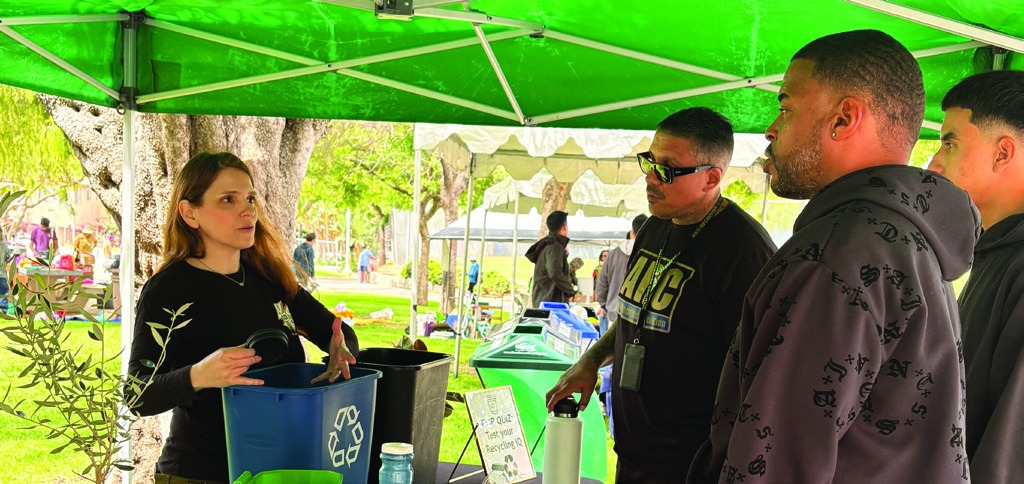
In April, Freedman represented Local 80’s Green Committee at Burbank’s Earth Day event, alongside Locals 800, 600 and 892, with Local 871 joining for the first time. There, she offered a compact version of the waste-sorting education she’s taught in crafts service skills training over the past two years, focused specifically on to-go coffee disposables—a session that drew strong public engagement.
In February, Freedman partnered with Local 871 to host a Recycling Masterclass & Sustainable Production Resources training aimed at union production management, covering fundamentals and pointing attendees toward sustainable vendor solutions, including the PGA’s sustainability tool kit. Attendees came from Locals 44, 800, 871 and 111—including that local’s vice national chair, who is now considering starting a Green Committee of their own—plus the DGA and PGA.
Freedman also brought in three vendors to table at the event: Reel Waste & Recycling, Everyday Action and EcoSet. The session ran well past its scheduled two hours as attendees stayed to keep asking questions.
That same month, Local 728 held its quarterly clean-energy Techquity Demo event, drawing about 50 attendees including vendors. There, Freedman provided low-waste crafty service and coffee and tea for the gathering. She also spoke with a sustainability coordinator at a major studio who voiced a common frustration: the on-set perception that sustainability coordinators are essentially glorified trash managers. The coordinator was encouraged to hear that Crafts Service members are now receiving formal waste-sorting training, positioning them to take on that role more reliably and credibly going forward.
Last November, the Art Directors Guild’s Green Committee hosted an EcoSet facility tour that Freedman used to bring in Local 111’s vice national chair and Local 871’s director of education, both of whom loved what they saw.
Freedman’s advocacy has also reached city government. She was appointed to the Sustainable Burbank Commission by the Burbank city council and now serves as the official liaison between that commission and IATSE’s Interlocal Green Committees—a role designed to funnel information about film industry sustainability efforts directly to the city, and to strengthen the relationship between film workers and the city more broadly.
The Case For Producers
For producers still weighing whether any of this is worth the coordination, Freedman offers a hook: publicity and reporting value. Productions with ESG reporting obligations can track food donations in pounds or meals served, alongside the fuel-consumption metrics that typically dominate a production’s carbon accounting.
Freedman sees that fuel-first focus as a blind spot. “Sustainability is a holistic process,” she argues. It’s about maximizing broad impact, and food reallocation isn’t just an environmental measure; it’s a social one.
“It’s a good publicity story for your production,” she adds. “The donation process can cost you little to nothing. You’ve already paid for the extra food, so why let it go to waste?”
If there’s a single principle underlying everything Freedman does, it’s a refusal to let the scale of the problem prevent her from acting on the aspects of it she can actually reach. “Do something over nothing,” she says. “Don’t let perfection be the enemy of the good.” She started down this path after observing that no one else was stepping up to the plate.
Her advice to producers, department heads and crew alike isn’t to overhaul operations overnight. It’s to start small. “Do the one thing that resonates with you and feels within your capacity,” Freedman says. “Even if you can only do that one thing, at least it got done.”