Innovation and dedication are requisites for any producer applying for the Producers Mark. But to earn the Mark, those producers must also demonstrate that they performed, in a decision-making capacity, a major portion of the producing functions on a motion picture.
Because each project offers its own unique set of circumstances, the challenges and triumphs vary wildly across budget, talent, location, distribution and more. But the denominator common to each producer who receives the Mark is the quality of their contribution to each phase of production—development, preproduction, production and postproduction.
Here, the producers of three forthcoming features share details about their Mark-certifying work.
Forgotten Island
Mark Swift, p.g.a.
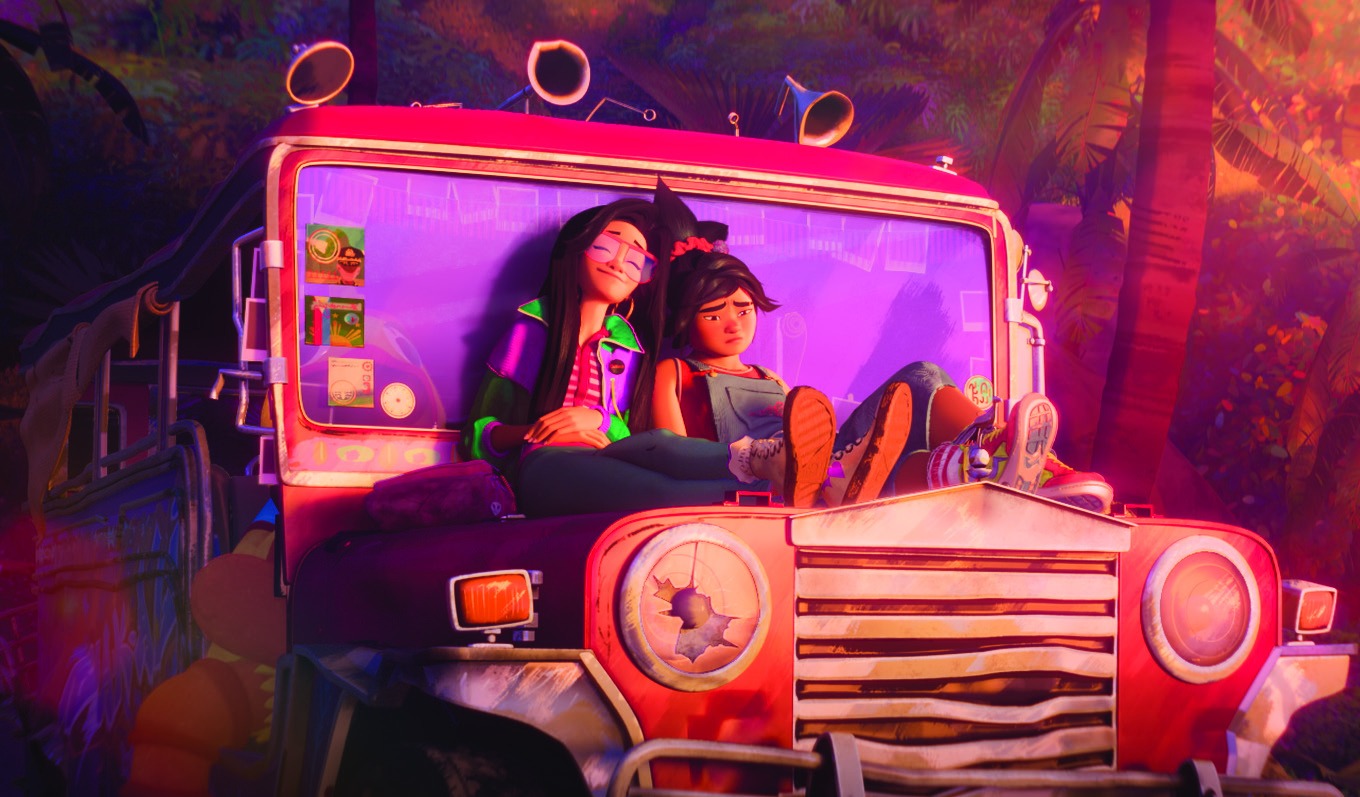
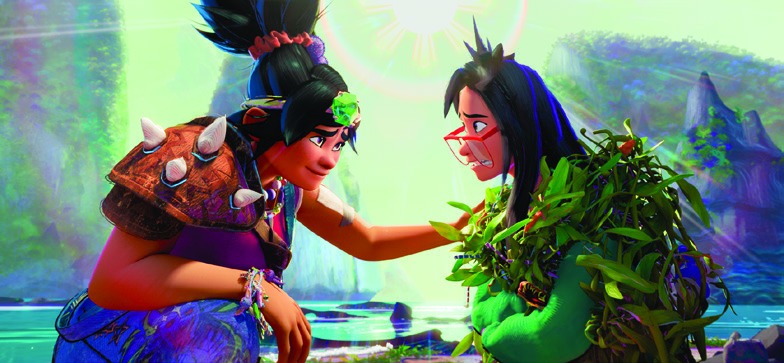
While celebrating their last night together before embarking on separate life paths, Jo and Raissa stumble upon a mysterious portal that transports them to the fantastical island of Nakali, packed with magical and mythological creatures they grew up hearing about in stories shared by their Filipino families.
Joined by well-meaning but hapless weredog Raww and a small but mighty pack of pals, Jo and Raissa must face The Dreaded Manananggal, the most feared creature on the island. When they discover that the memories of their entire friendship are the price for returning home, Jo and Raissa will race to find a way to leave the island before they forget each other forever. Produced by Mark Swift, this DreamWorks animated feature was cowritten and codirected by Joel Crawford and Januel Mercado. The three have been a team for about 10 years.
The film is being described publicly as one of the first major studio animated features centered on Filipino culture. When you first became involved in Forgotten Island, what was your vision for balancing a universally accessible story with a narrative rooted in Filipino culture and mythology?
Our two directors have deep connections to the Philippines. Januel’s parents are in the Philippines, and Joel is married to a Filipina, so his kids have Filipino heritage. The origin of the story came from them trying to do a love letter to the Philippines.
Any film you make has to exist on its own narrative, no matter what the setting is. Is it an engaging story? Can anyone, if they’re from any part of the world, find a way into this movie? Forgotten Island is an ode to friendship and what makes friendships last. What is it that binds certain people together, while other friendships drift away as you get older and you move on? Having that core universal story of friendship that everyone can relate to was super important.
The specificity of the Philippines as a setting is a strength. Giving it this unique setting adds to the enjoyment of the film. But underpinning it all, there has to be a great story; otherwise, no one’s going to go see it. It can’t just be a love letter to the Philippines with nothing beneath it. Animated movies cost a lot of money, so they have to make a lot of money. That’s the business, so we’ve got to make something that is universal.
We all work in an art, but this is a very expensive art. I want to continue to have DreamWorks make animated movies. That only happens if our movies are popular, and people go, and people want to see more of them. So it’s a responsibility that I have, and everyone who works on the film has.
Joel, Januel and I came to the project with open hands. We’d ask, “Who’s got an idea that’s better than ours? Who’s got some information that we don’t know?” DreamWorks had 400 people working on this movie. Everyone who works at DreamWorks, in my opinion, went into animation because they love movies and they love the art. So we try and engage that whole community of filmmakers as much as we can. They brought ideas and feedback and gags and jokes, and the best ones made their way to the script. We’re very blessed to have that community and we always say, the more the merrier!
How did you contribute to decisions related to the film’s setting, themes or portrayal of Filipino identity?
One of the things that I really championed on this film was to actually go to the Philippines. I have no connections to the Philippines, and I felt, for our directors and our art team, it was really important to be there, experience it, get a sense of it. When you’re adding a line to a budget that says “research trip to the Philippines,” that line is questioned. But we learned so much from that trip, not just about how the Philippines looks, which was obviously really important for our art team. But also, what is the culture? What is the connection with the people?
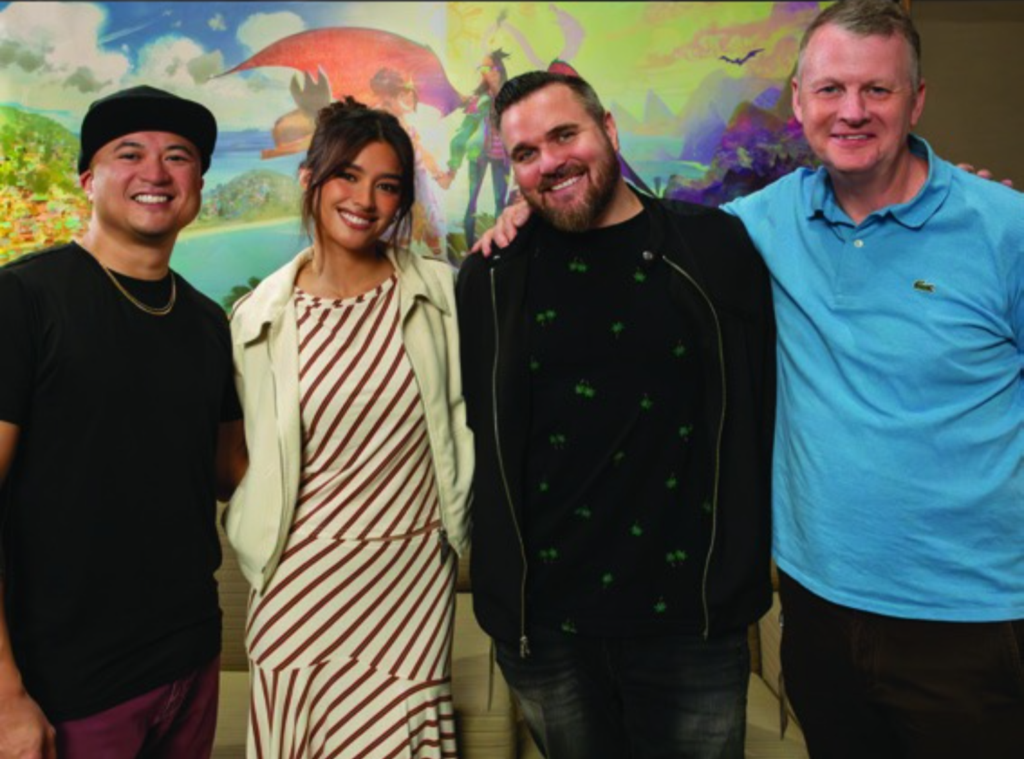
In the movie, we have a big family party that takes place in the Philippines, where the culture is very family oriented. When Januel’s family found out a scene like this was going to be in the movie, they closed down the street where they live and threw one of those parties, which involved lots of food, karaoke singing and games. There were probably 100 people at this party, all “family” by a loose definition. It was amazing to be so welcomed and to experience what that connection means in the Philippines.
Another very important thing involved the look of the film, which has a stylistic component that involves 2D animation. In brainstorming that with the directors, we decided to hire a Filipino company called Snipple Animation. They primarily do TV, but they have incredibly talented artists and did amazing work when given the opportunity. They came to the table with lots of ideas, and they were so excited to be working on this film because the Philippines hasn’t had a huge amount of attention from Hollywood movies. This big DreamWorks movie is meaningful to everyone who has Filipino connections.
How we represented the Philippines was really important to us. There are Filipino populations all over the world, so we were able to tap into quite a number of Filipino artists who had a massive impact on the film, both within the art department and the story department. Now that we’ve shared it with people from the Philippines or who have a Filipino background, they say it’s so authentic. That’s all due to the love and the knowledge of those artists and what they brought to the process.
Can you describe a significant production challenge that you encountered and how you addressed it?
For this film, the biggest challenge was the schedule. DreamWorks wanted the movie to come out this year. That meant we had about two and a half years from the time we engaged storyboard artists to when we were to deliver the movie. Typically, a DreamWorks movie takes three or maybe three and a half years.
We took on the challenge because we really wanted to make this movie. But it was definitely taxing. It was a bigger leap than I thought. The last few movies I’ve done have all been sequels or have been from known IP, like Captain Underpants, so we knew what it was going to look like. With Forgotten Island, because it was all original artwork, we had less time to develop the look of the film, less time to build the characters and less time to test the characters than we typically would.
The animation process is different from live action in that you make the whole movie, then keep refining it. We do that every three months or so with a screening that follows. Throughout the process, you might get six, seven or eight screenings, and after each one, you’re tweaking the script, trying to answer questions that came up from the previous screening. We did that part of the process really well. It moved in the way that it should move and there were no real surprises. That really saved our bacon. If one of those screenings didn’t go exactly to plan, with it being an original film, I think we would have had to make some real compromises to the movie.
The Boy in the Iron Box
J. Miles Dale, p.g.a.
Flying dark, a plane carrying a team of mercenaries crash-lands on a remote snowy summit. They come across a mazelike stone fortress, but it’s no refuge from the wolves and the freezing wind. It’s more like a trap. What they discover can stop the heart—or worse. As terror takes a new shape, the real battle for survival begins. The film was produced by J. Miles Dale in partnership with longtime collaborator Guillermo del Toro.
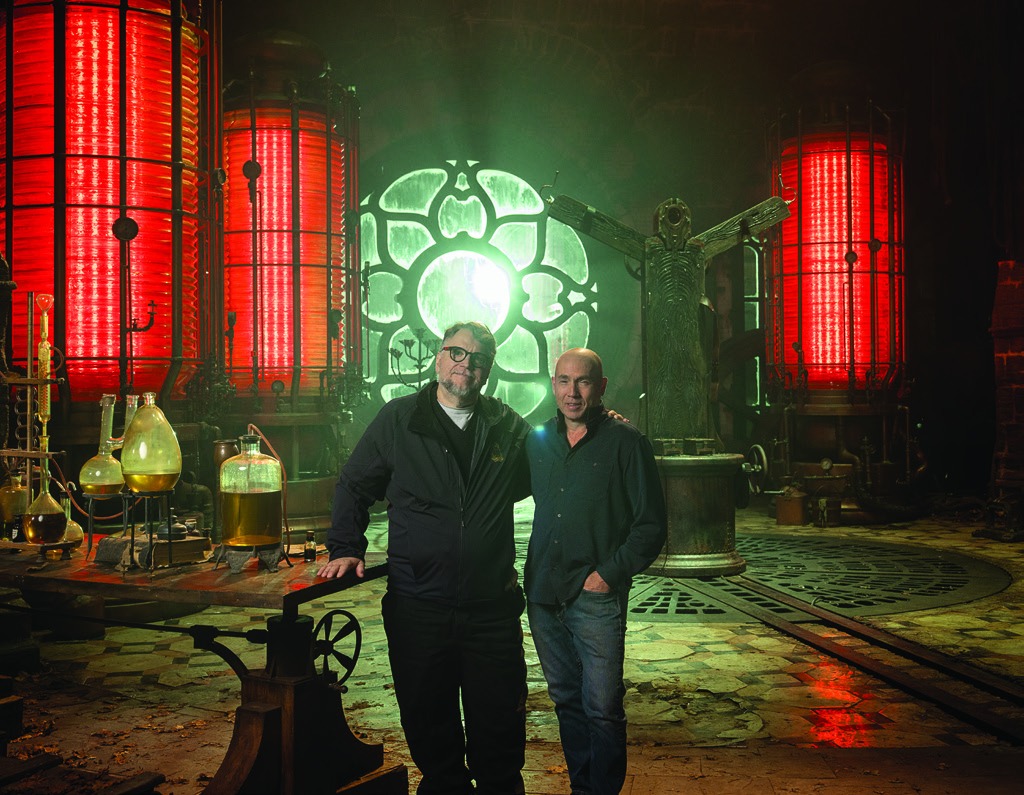
What strengths do you and Guillermo individually bring to a project like The Boy In The Iron Box?
In general, Guillermo leans to the creative, and I am more active on the operational side, but we both know enough about each other’s worlds to be able to have a meaningful exchange on almost any topic or issue, which makes for a very healthy mix when it comes to approaches to problem-solving.
One of the most distinctive aspects of the film is its visual world. How did you contribute as producers to shaping the character and creature designs?
The titular “Boy” creature was our principal design challenge, and that creative work was overseen by our director, David Prior. Our primary contribution was to put David together with our longtime creature designer, the great Mike Hill, who oversaw the sculpting, paint work and application on our actor, Jaeden Martell. The results are pretty spooky!
The producers mark seeks to identify contributions across development, preproduction, production and postproduction. Looking back, which production phase of The Boy In The Iron Box demanded the most hands-on producing effort from you?
Well, Guillermo and Chuck Hogan wrote the book that the film is based on, so that was some early heavy lifting! As for our contributions, the goal is to always support the director’s vision as best as we can, so at every stage we did our best to embrace that approach.
Have you and Guillermo developed a shorthand for problem-solving after working together for almost two decades?
Yes, we’ve developed a great shorthand over the years, and I have a good idea of what Guillermo’s expectations are when we’re producing and he’s not directing. The methodology doesn’t change much; it’s applying those same high standards to the director’s creative process, which may be very different from Guillermo’s.
You’re a member of the PGA’S sustainability task force. Were there any sustainable production practices that you’re particularly proud of having utilized during the making of The Boy In The Iron Box?
We have gone almost exclusively to electric vehicles in our rental fleet and to electric generators in an effort to eliminate our use of diesel fuel. We also utilized a vendor who separated our garbage so that recycling and compostable materials were dealt with efficiently. We used environmentally friendly water bottles, of course, in an effort to reduce our use of plastics. We’re in it for the long haul with sustainability and are doing our best to refine those practices and to empower every crew member to do the same.
Nuisance Bear
Michael Code, p.g.a.
Will N. Miller, p.g.a.
Teddy Leifer, p.g.a.
Gabriela Osio Vanden, p.g.a.
Jack Weisman, p.g.a.
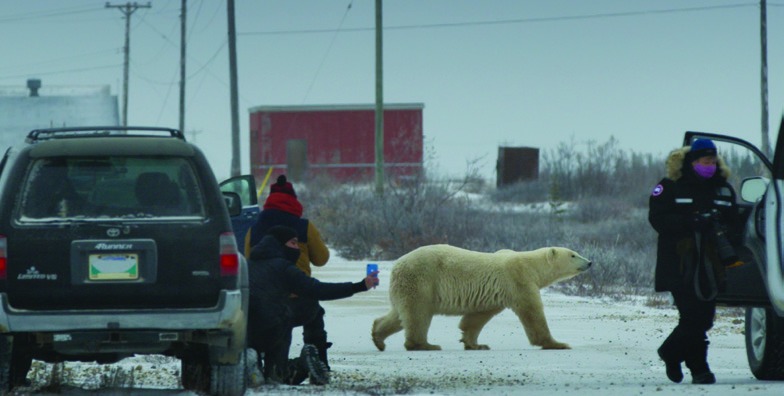
This award-winning documentary follows a polar bear that is forced to navigate a human world of tourists, wildlife officers and hunters as its ancient migration collides with modern life. When a sacred predator is branded a nuisance, it becomes unclear who truly belongs in this shared landscape.
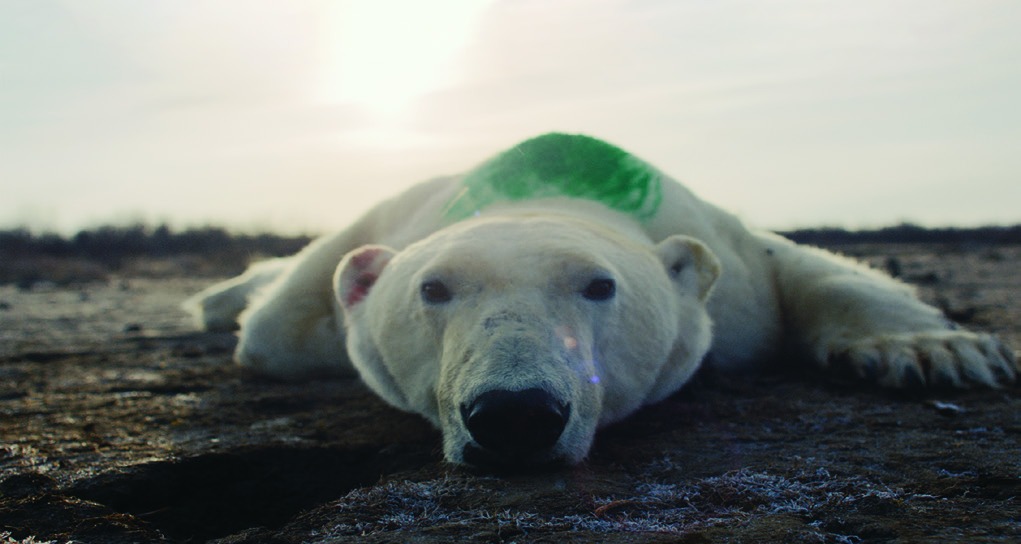
The film takes place within a community whose history and identity are closely connected to Indigenous peoples and the arctic environment. How did you approach engagement with local and Indigenous stakeholders during development and production? Were there moments when feedback from community members or local partners influenced the creative direction of the project? If so, how did you navigate those conversations as producers?
Michael Code and Jack Weisman: The communities represented in Nuisance Bear are not simply backdrops to the story. They are places where the questions at the center of the film are lived every day: polar bear migration, human-bear conflict, tourism, waste management, conservation policy, hunting, public safety and the pressures of a changing North.
Both Churchill, Manitoba, and Arviat, Nunavut, have painful colonial histories, including a long pattern of extractive and reductive filmmaking by nonnative filmmakers. From the outset, our aim was to build a process rooted in meaningful informed consent, transparency and input.
We spent 10 years making this film. We needed that much time. Creative freedom, patience, and space were crucial to developing trust organically rather than transactionally. During preproduction, we held open community meetings in both English and Inuktitut. We explained the project in detail, screened our short film Nuisance Bear as an artistic reference and invited feedback. Through this process, we met many of our key collaborators, including executive producers Joe Karetak and Eric Anoee, as well as narrator Mike Gibbons, whose powerful personal story ultimately became the emotional backbone of the film.
As producers, we had to remain open to the film revealing itself through the relationships we built. Our goal was always to let local voices and images speak for themselves. By moving at the speed required to build trust, we received unprecedented access that had been denied to other productions for many years. We experienced genuine acceptance and excitement, but we never took that buy-in for granted. Trust building was a constant process throughout our production.
Continuing in that spirit, we have partnered with Isuma Distribution International, Canada’s first Inuit independent production and distribution company, who have acquired the impact distribution rights for Nuisance Bear. With Isuma, we will return the film to the communities where it was made as part of a Northern Community Screening Tour. This tour is first and foremost an act of return: a way to say thank you, and to ensure the communities closest to the film can experience and discuss it before it reaches broader public audiences.
Nature documentaries frequently require producers to make difficult decisions regarding time, resources and patience in the field. Can you describe a moment when a significant producing decision materially affected the outcome of the film? How did environmental factors such as weather, seasonal conditions and animal behavior affect production schedules and budgets?
Gabriela Osio Vanden and Jack Weisman: One of the most important producing decisions we made was to maximize our time in the field. A typical production might budget 15 to 30 field days to film a polar bear sequence. Because our 88-minute film is constructed around the journey of a single polar bear, we spent more than 260 days filming on land and sea in order to maximize our chances of capturing the extraordinary events that occur in the film.
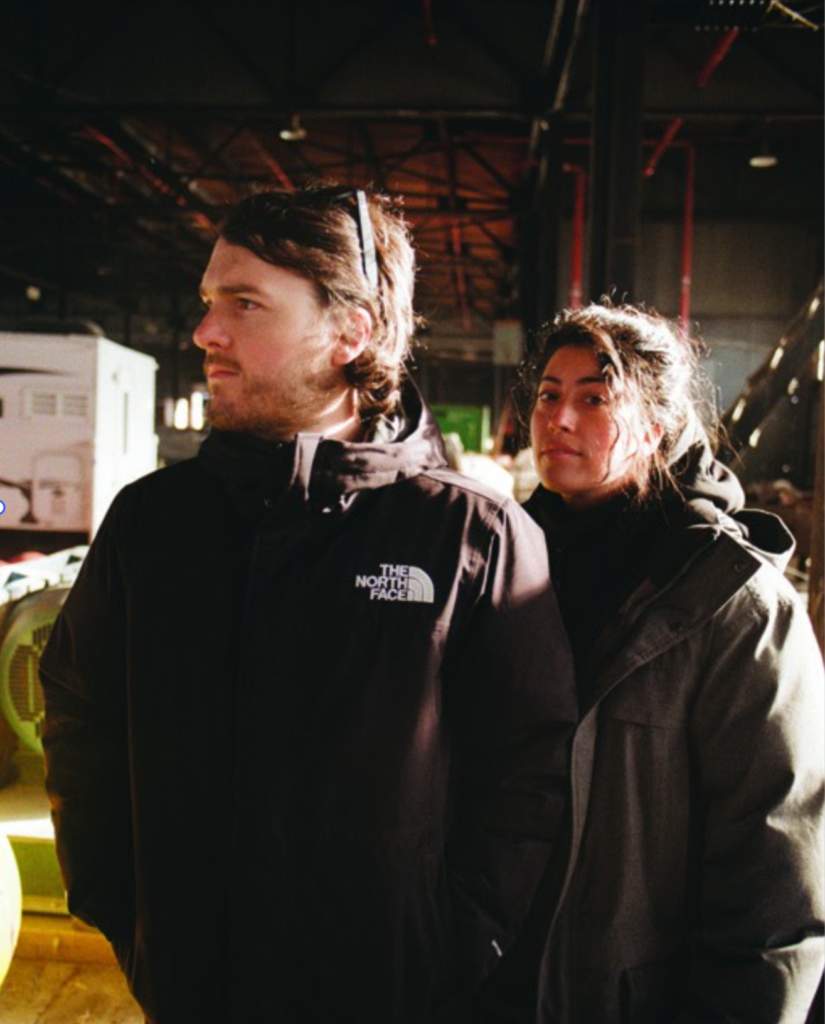
When Jack and I began, we had no experience as wildlife filmmakers. We were starting from zero, so we brought in collaborators with deep regional and technical knowledge, including Sayisi Dene producer and cinematographer Michael Code, whose family lives in the regions around Churchill and Arviat. Alongside Michael, Inuit executive producers Joe Karetak and Eric Anoee, and Churchill-based coproducers Cathie Edgar and Ian Kerr, we developed creative and logistical solutions that allowed us to live and work in the North for as long as possible.
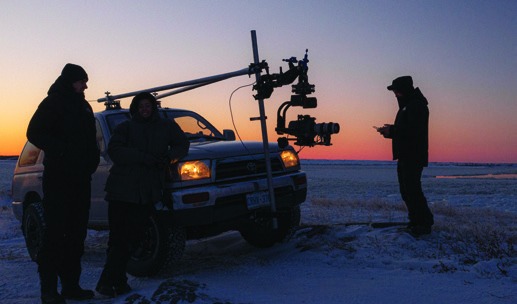
The scope of the film was extremely ambitious. We shot on 27 cameras, all in 4K resolution or higher, and built a dedicated DIT and equipment room inside the modest bungalow we rented in Churchill for the 16 months of core production. The keystone of our system was the Shotover M1 six-axis camera stabilizer, mounted to a 4×4 vehicle, boat and occasionally a helicopter. It was equipped with a RED Helium 8K cinema camera and a Canon 50–1000mm lens.
This immense, weather-protected camera system weighed more than 100 pounds, and much of our logistical planning revolved around training, transportation, assembly, mounting and keeping it in the field for as many days as possible. With the generous support of coexecutive producer Jeff Turner and River Road Films, the system allowed us to maintain safe distances from the bears. We never needed to exit the vehicle to film or even change batteries.
That was a major producing choice. It required more resources and planning upfront, but it gave us safety, patience and cinematic reach. It allowed us to stay with the bears long enough to capture behavior that would have been impossible on a shorter or more conventional schedule.
What were the most significant logistical challenges associated with filming in a remote northern location, and how were those challenges overcome?
Jack Weisman and Gabriela Osio Vanden: There were many significant obstacles to this project, and those obstacles created both risk and opportunity. Gabby and I believe documentary filmmaking requires a leap of faith—a willingness to begin without knowing the ending. What we did know from the start was that we would face enormous challenges and might fail spectacularly. We also knew that if we could overcome those challenges, the creative rewards would be immense.
The Arctic is an environment that demands creativity to survive. Everywhere we looked, we found inspiration from humans and animals defying the odds.
Through this process, we learned that obstacles are not something to fear. They can become part of the work itself.
We dealt with travel delays, mechanical failures and multiday blizzards. We safely tracked bears at night, which often felt like finding a needle in a haystack.
We also navigated delicate social and cultural dynamics, including taboos, and the responsibilities of outsiders telling stories in Indigenous and northern communities.
We overcame these challenges by building a production model around patience, redundancy, and local knowledge. We extended the production window, created a long-term base in Churchill, built a local network of collaborators, and relied on community partners whose judgment was often more important than any production plan. We designed our camera systems, safety protocols, and travel logistics around the reality that the North would set the terms.
There were many moments of doubt. In those moments, we would look for a sign. Often, narrator Mike Gibbons or executive producer Joe Karetak would respond by saying, “We must keep going, no matter how difficult it gets.” Despite everything we faced, there was a deep unifying belief that what we were making was special and that the story wanted to be told.
What aspect of producing Nuisance Bear required the greatest amount of leadership, judgment or decision-making from you personally?
Will N. Miller and Teddy Leifer: Our responsibility as producers was to know when to lead and when to listen. The highest priority was always safety: for the crew, for community members and for the bears. We knew there would be extra scrutiny on our team because Nuisance Bear offers an unflinching portrait of human-bear conflict rather than a postcard image of polar bears. That meant following wildlife protocols precisely and making conservative decisions, even when the creative stakes were high.
It also meant that decision-making could not be fixed or follow traditional film-team hierarchies. We were working in Inuit and Dene contexts where leadership can be fluid, situational and rooted in lived experience. That shaped how we produced the film. In one moment, the right leader might be Michael Code because of his intuitive knowledge of the land, equipment and safety. In another, it might be Joe Karetak or Eric Anoee because the decision required cultural knowledge, language or community trust. In moments of emotional or practical difficulty, we often looked to Mike Gibbons and Joe Karetak, whose judgment carried great weight.
Editorially, there were many possible ways to shape the film in postproduction. One of the greatest producing challenges was finding the right balance between the micro and macro storylines: the dramatic visual possibilities of the bears’ journey and the smaller, more personal narratives unfolding around them. The goal was to arrive at a film that was narratively satisfying while remaining authentic to the people, bears and place at its center. That process required a major team effort, with producers, partners and stakeholders offering regular feedback to us and our editor, Andres Landau, to ensure that multiple points of view were heard and reflected.
The leadership required of us was to hold the larger vision without imposing ourselves on every decision. Producing Nuisance Bear meant building a structure where the right person could lead at the right moment.